Montana operates on the Mountain Time Zone, switching between MST and MDT throughout the year. This shift plays an important role in how Montana’s local time aligns with the rest of the United States and worldwide regions.
States
What’s the Time in Montana? - Time Zone Info
763 views
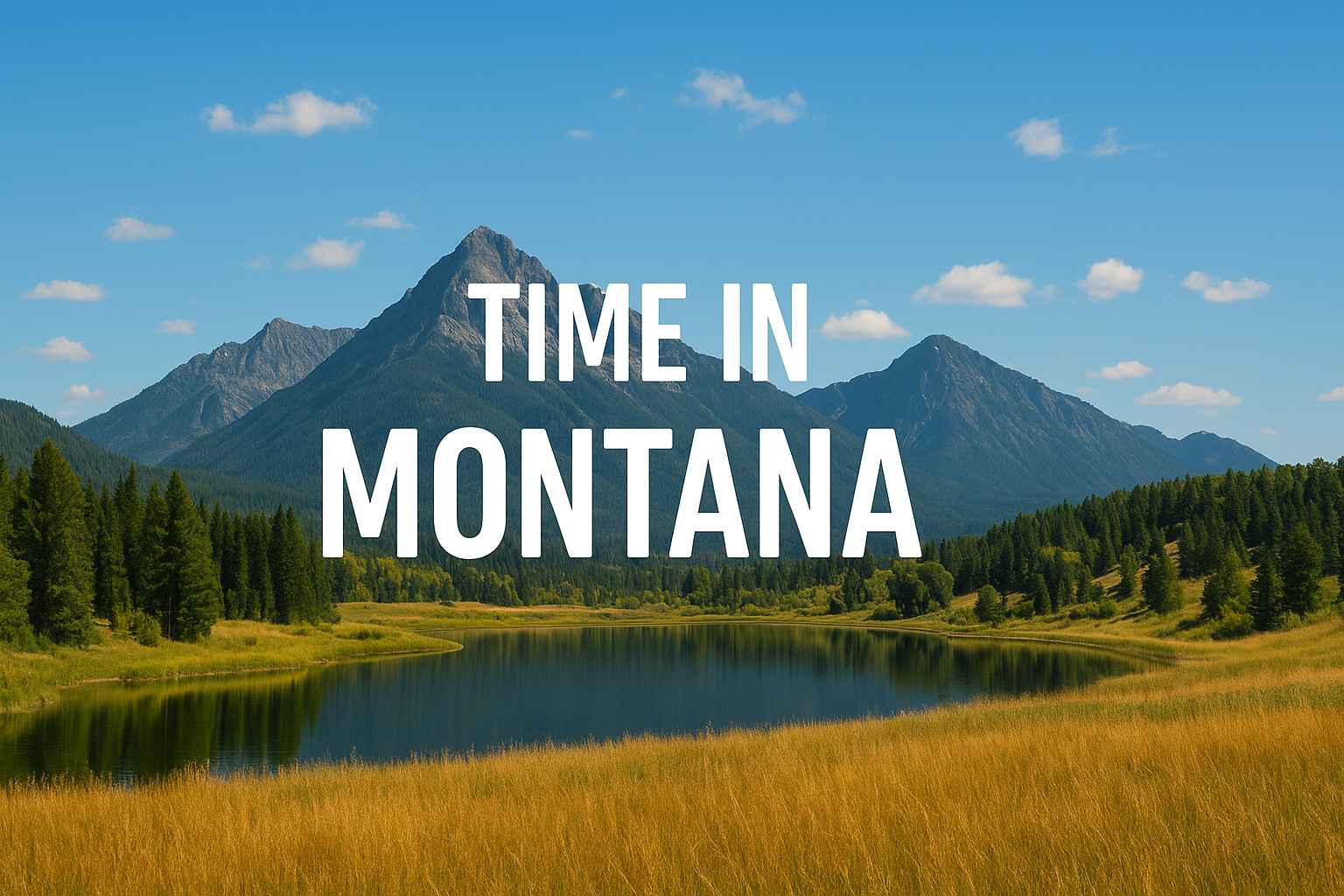
Discover how Montana’s MST/MDT time system works, how it compares with other regions, and key facts about the state’s geography, climate, and major cities.
Time in Montana
When checking the time in Montana, many people refer to the state capital, Helena. Montana uses one unified time standard across the entire state.
Montana’s Time Zone
Montana is located within the Mountain Time Zone (MT), shared by several western and central U.S. states, along with parts of Canada and Mexico. The state observes Daylight Saving Time (DST), causing the official time to change seasonally.
Montana uses two main designations:
Time Designation | Abbreviation | UTC Offset | Season |
|---|---|---|---|
Mountain Standard Time | MST | UTC−7 | |
Mountain Daylight Time | MDT | UTC−6 | Spring & Summer |
MST (UTC−7): Used during the colder months.
MDT (UTC−6): Used when clocks are advanced one hour to extend daylight in the evening.
Time Differences Within the United States
Because Montana follows the Mountain Time Zone, its time relationship to other U.S. regions is:
1 hour ahead of the Pacific Time Zone
1 hour behind the Central Time Zone
2 hours behind the Eastern Time Zone
Usually 1 hour ahead of Alaska, depending on seasonal changes
Typically 3 hours ahead of Hawaii during certain times of year
Major Montana Cities and Their Time Zone Usage
All of Montana’s major cities observe the same time change schedule:
City | Winter (MST) | Summer (MDT) | Notes |
|---|---|---|---|
Billings | UTC−7 | UTC−6 | Mountain Time |
Missoula | UTC−7 | UTC−6 | Mountain Time |
Great Falls | UTC−7 | UTC−6 | Mountain Time |
Bozeman | UTC−7 | UTC−6 | Mountain Time |
Helena | UTC−7 | UTC−6 | State capital |
Kalispell | UTC−7 | UTC−6 | Mountain Time |
Butte | UTC−7 | UTC−6 | Mountain Time |
Comparing Montana Time with Other Countries
Seasonal clock changes create shifting differences between Montana and other global locations. Here are the approximate offsets:
Location | Difference During MST | Difference During MDT |
|---|---|---|
+7 hours | +6 hours | |
+13.5 hours | +12.5 hours | |
+16 hours | +15 hours | |
+8 hours | +7 hours |
Example:
During MST: 9:00 AM in Montana = 4:00 PM in London
During MDT: The same event occurs one hour earlier relative to Montana.
Daylight Saving Time in Montana
Montana follows the nationwide DST schedule.
DST influences:
Travel itineraries
Cross-country communication
Scheduling for international calls
Business coordination across regions
Understanding these adjustments helps explain why time differences aren’t constant year-round.
Montana: Geographic & Cultural Overview
General Information
Category | Details |
|---|---|
Location | Northwestern United States |
Area | ~380,800 km² (~147,040 sq mi) |
Coordinates | ~44°N–49°N, 104°W–116°W |
Borders | Canada to the north; Idaho, Wyoming, North Dakota, South Dakota |
Capital | Helena |
Major Cities | Billings, Missoula, Great Falls, Bozeman, Helena, Kalispell |
Major Landforms
Montana’s landscape is one of the most diverse in the U.S.
Mountain Ranges: Rocky Mountains, Bitterroot Range, Absaroka Range, Beartooth Mountains
Highest Point: Granite Peak (3,904 m / 12,807 ft)
Eastern Plains: Rolling prairie and badlands
Major Valleys: Gallatin Valley, Flathead Valley, Bitterroot Valley
Water Features:
Rivers: Missouri River (originates in Montana), Yellowstone River, Clark Fork
Lakes: Flathead Lake, Fort Peck Lake, Seeley Lake
National Parks: Glacier National Park, parts of Yellowstone National Park
Climate Zones
Montana contains multiple climate types influenced by altitude and geography:
Region | Climate Type | Description |
|---|---|---|
West Montana | Continental/Maritime | Milder winters, wet springs, moderate summers |
Central Plains | Semi-arid | Warm summers, cold winters, low humidity |
Mountains | Alpine | Long snowy winters, cool summers |
Eastern Plains | Steppe/Semi-arid | Hotter summers, colder winters, sparse rainfall |
Major Industries in Montana
Montana’s economy blends natural resource sectors with growing modern industries:
Energy: Coal, oil, natural gas, wind, hydroelectric power
Agriculture: Cattle ranching, wheat, barley, sugar beets, hay
Mining: Copper, gold, palladium, molybdenum
Tourism: National parks, outdoor recreation, skiing, fishing
Forestry: Lumber production and timber management
Technology & Startups: Expanding tech presence in cities like Bozeman and Missoula
Manufacturing: Food processing, wood products, machinery
Summary
Montana uses the Mountain Time Zone, shifting between MST (UTC−7) in winter and MDT (UTC−6) in summer due to Daylight Saving Time. This influences how Montana’s time aligns with other U.S. regions and global locations. Combined with its dramatic geography, varying climate, and diverse industries, Montana is a significant hub for travel, international communication, and regional commerce.