Explore when winter really begins by comparing astronomical and meteorological definitions, how they differ across regions, and why the distinction matters.
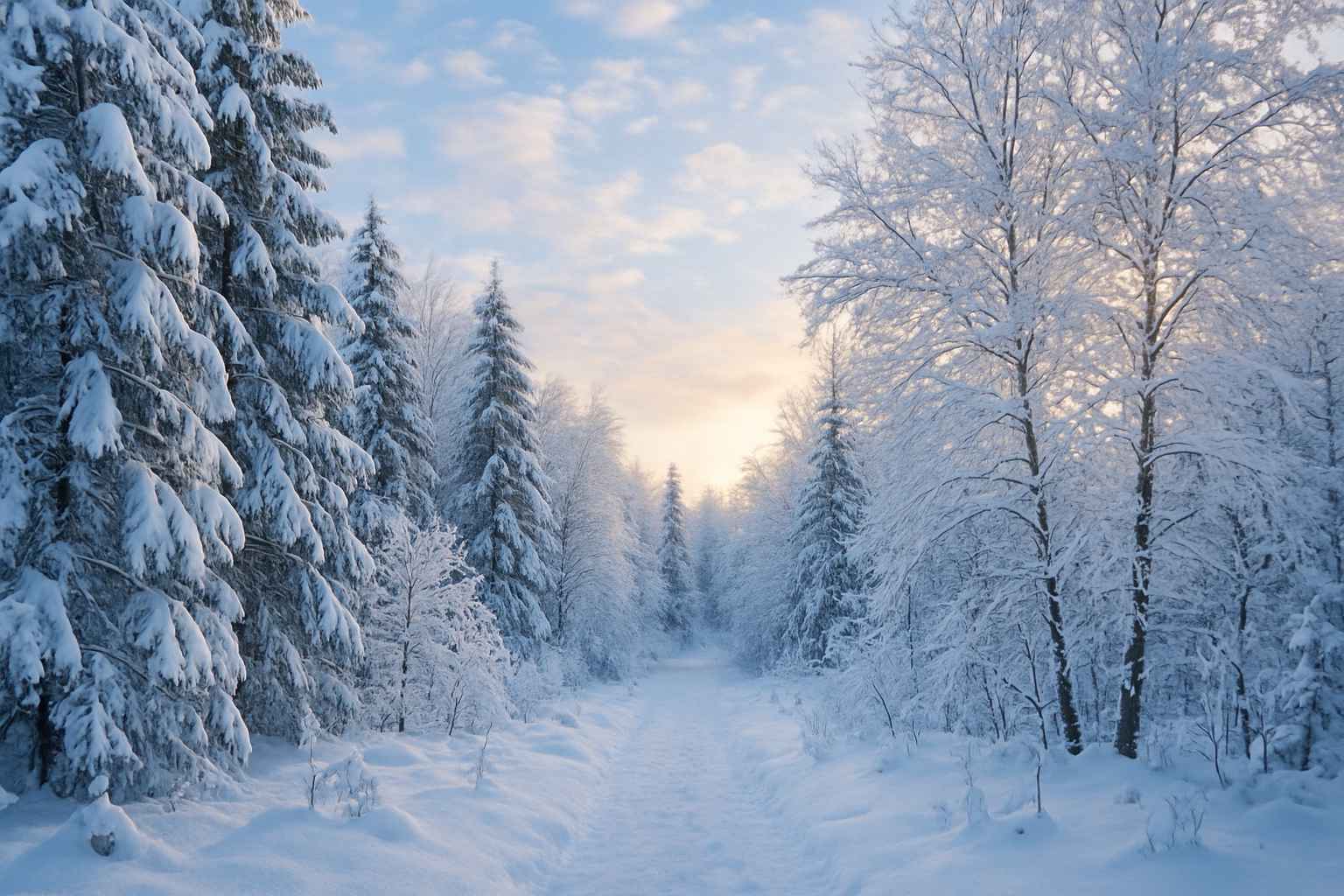
Winter is the season most often associated with cold, stillness, holidays, sparkling snow, and the faint scent of chimney smoke. It’s a time when the world changes its colors: leaves disappear, the ground grows silent, and the sky takes on a deep, transparent hue. Yet, although everyone intuitively feels when “winter has arrived,” its scientific definition is far from straightforward.
It all depends on how you look at it. Winter can be defined by the calendar, by temperature data, or by the Earth’s position around the Sun. Thus, the question “When exactly does winter begin?” has no single answer — its boundaries shift depending on the approach, the climate zone, and even cultural traditions.
This article explores the two main scientific perspectives — astronomical and meteorological — and how the idea of winter varies across different parts of the world.
Two Ways to Define Winter: Astronomical and Meteorological
A. Astronomical Winter
Astronomical winter begins on the day of the winter solstice, when the Northern Hemisphere receives the least sunlight because of Earth’s axial tilt. This happens around December 21 or 22. On that day, the Sun reaches its lowest point in the sky, daylight hours are the shortest, and night is at its longest.
From this moment onward, the days slowly start to grow longer, even though real warmth doesn’t return for several more weeks. Astronomical winter continues until the spring equinox, around March 20, when day and night once again become equal.
This system of defining seasons is based on Earth’s orbit around the Sun and the tilt of its axis. For astronomers and those studying celestial motion, it’s the natural way to divide the year. Interestingly, under this system, all seasons are roughly equal in length, but they don’t always align with surface temperature changes.
For instance, even after the winter solstice — when days are already lengthening — temperatures remain low. This happens because Earth stores and releases heat with a delay; climatic inertia pushes the “coldest period” several weeks beyond the astronomical start of winter.
In the Northern Hemisphere, astronomical winter lasts from about December 21 to March 20, while in the Southern Hemisphere, it falls between June 21 and September 22. So, when people in the north celebrate Christmas amid snow, those in the south are enjoying summer sunshine.
B. Meteorological Winter
The meteorological approach, used by weather and climate specialists, is based not on celestial mechanics but on average temperatures and calendar convenience.
In meteorology, winter always begins on December 1 and ends on February 28 (or 29). This divides the year neatly into four equal three-month seasons: December–February for winter; March–May for spring; June–August for summer; and September–November for autumn.
This method simplifies climate observation, data comparison, and temperature statistics. It’s especially useful for researchers analyzing long-term weather patterns, as they don’t need to adjust for the slight yearly shifts in solstice and equinox dates.
Meteorological winter is also more practical in everyday life: it coincides with the coldest period in most of the Northern Hemisphere, when daylight is shortest and snow and frost are most common.
For the Southern Hemisphere, everything is reversed: meteorological winter runs from June 1 to August 31. Those months bring the coolest temperatures, shorter days, and a lower sun angle in the sky.
Winter Around the World
North America
Across most of North America — from continental Canada to the northern United States — astronomical winter begins around December 21 and lasts until March 20, while meteorological winter covers December 1 through February 28.
For people in this region, winter means short days, severe cold, blizzards, frozen lakes, and rivers. It’s also the season of holidays — Christmas, New Year’s, and winter breaks. In cities, homes glow with festive lights, while in the countryside, snow and silence create a sense of suspended time.
Western Europe
In the United Kingdom and most of Western Europe, the pattern is similar: meteorological winter runs from December to February, while astronomical winter spans the solstice to the equinox.
Although the climate is milder due to oceanic influence, the rhythm of nature feels the same. Days are short, often gray, and rarely extremely cold. In urban areas, the festive spirit lasts through January, after which winter becomes quieter, sometimes even melancholic.
Both definitions — astronomical and meteorological — are used interchangeably here. Meteorologists rely on fixed dates for reports, while the media and cultural institutions often reference astronomical events.
On the other side of the planet, the situation is reversed. When it’s winter in the north, it’s summer here. Accordingly, meteorological winter lasts from June 1 to August 31, and astronomical winter runs from June 21 to September 22.
This contrast arises from Earth’s axial tilt: during the Northern Hemisphere’s winter solstice, the Southern Hemisphere receives the most sunlight. Hence, seasons flip.
For people living in the south, winter evokes different images — cooler, wetter weather, fewer sunny days, and lush green hills revived after the summer heat. Snow is rare; mist and rainfall are more common symbols of the season.
Winter Months by Region
This table illustrates how relative and flexible the concept of “winter” is — depending on where you live, it might occur at an entirely different time of year.
Why the Definition Matters
At first glance, the difference between astronomical and meteorological winter may seem minor. But in reality, it has numerous practical implications.
For Science
Meteorologists and climatologists require consistent timeframes to collect comparable data. When winter always starts on December 1, it becomes easier to track temperature trends year to year and study long-term changes — for instance, how much warmer winters have become over recent decades.
Astronomical definitions are less convenient for such records since solstice dates shift slightly each year. However, they reflect the true cosmic cycles of the planet.
For Culture and Tradition
Many winter holidays have astronomical roots. Celebrations around the winter solstice symbolize the “rebirth of light,” the return of the Sun, and the triumph of brightness over darkness. Across civilizations, this moment carried deep meaning long before modern calendars existed.
For Tourism and Economy
The definition of winter also affects seasonal planning in tourism. In northern countries, winter resorts typically open in early December — the start of meteorological winter — regardless of the solstice.
In the southern hemisphere, travel agencies align winter promotions with June–August, the coldest and least sunny months — ideal for skiing or simply escaping the summer heat of tropical regions.
For Agriculture
Understanding when winter begins helps in planning agricultural cycles: soil preparation, crop storage, and planting schedules. Farmers often rely on both calendar-based and climate-based definitions, depending on local conditions.
For Everyday Life
For most people, the difference between the two definitions may feel abstract, but it subtly shapes daily routines. In the Northern Hemisphere, winter includes major holidays such as Christmas, New Year’s, and midwinter commemorations. In the Southern Hemisphere, however, “winter” falls mid-year, giving everyday life a very different rhythm.
Climatic Variations
While winter is generally associated with cold, its expression varies greatly across the planet. In high latitudes, it brings severe frost, frozen lakes, and thick snow cover. In temperate regions, it may be rainy, windy, and mostly snowless. Near the tropics, people rarely speak of “winter” at all — instead, they mark the transition between wet and dry seasons.
These contrasts depend on latitude, altitude, proximity to oceans, and the influence of sea currents. Even within one country, the start of winter can differ widely: in the mountains, snow may arrive in October, while coastal areas might not feel true cold until January.
When Does Winter Really Begin?
Ask a meteorologist, and the answer will be clear: December 1 in the north, June 1 in the south. Ask an astronomer, and they’ll say: December 21 or June 21, depending on the hemisphere.
Yet neither definition is more “correct” — each describes a different aspect of reality. Meteorological winter fits practical life; astronomical winter fits the rhythm of the cosmos.
For most people, though, winter begins not on a fixed date but when nature itself transforms — when the air turns sharper, trees stand bare, and breath becomes visible in the morning chill. That moment may come in November or even October, depending on where you are.
Thus, the question “When does winter begin?” isn’t only scientific — it’s also philosophical. It touches on our sense of time, light, warmth, and stillness.
Conclusion
Winter does not have a single starting point.
Its boundaries depend on context, method, and personal perception.
When viewed astronomically, winter begins on the winter solstice.
In meteorological terms, it begins on December 1 in the Northern Hemisphere and June 1 in the Southern Hemisphere.
Emotionally or symbolically, it starts whenever the world seems to slow down and turn inward.
In the Northern Hemisphere, winter generally spans December to February,
In the Southern Hemisphere, June to August.
So when you ask yourself, “When does winter begin?”, perhaps the deeper question is —
“What does winter mean to me?”
For some, it’s a date on the calendar; for others, it’s the first snowfall, the whisper of a cold wind, or simply the moment you reach for a warm blanket.