Capital Time Zone
Central European Summer Time CEST
What Time Is It in Croatia Right Now?
Local time in Zagreb
Today's Date and Day in Zagreb (HR):
Current Date and Time Information
Date&TimeDetails
Time Zone (IANA)
Day of Year
Days to Year End
Week of Year
Month of Year
Months to Year End
Current Season
Next Season
Leap Year
Next Leap Year
Today's Date in Other Formats
Unix
ISO
EU
US
SQL
Croatia Time Difference Tool - Convert Time Easily
Easily convert time zones between Croatia and any city, country, or time zone in the world. Use this tool to check the current time difference and plan meetings, calls, or travel with confidence. Choose any location as the primary reference point to display the time difference.
Explore Professional Features01:50PM
🌍 Time Zone Converter Guide
Compare times across different zones and explore any moment in the day
Click the up arrow to make any timezone your reference point. All time differences will be calculated from this base.
Drag the grip icon to rearrange timezones in your preferred order. Base timezone cannot be dragged but others can be reordered.
Click the X button to delete a timezone from your comparison. Cannot remove if it's the only one left.
Use the slider below to explore different times. Drag to see how times change across all zones simultaneously.
View hour tiles showing the full 24-hour day. Use the time slider to navigate through different hours. Darker tiles indicate nighttime hours.
Switch between 12h/24h format and choose "Each" to set different formats per timezone or "All" to apply the same format to all zones.
💡 Pro tip: Add more timezones using the search above, then set one as your base to see all time differences at a glance!
Croatia - Country Information
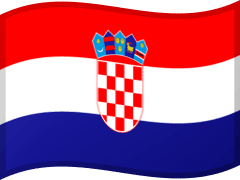
The flag of Croatia
EuropeCapital
Continent
ISO Code
Time Zone
IANA Timezone
Neighbors
Explore More Countries
 GuadeloupeUTC-04:00AST
 Equatorial GuineaUTC+01:00WAT
 GreeceUTC+03:00EEST
 South Georgia and the South Sandwich IslandsUTC-02:00SGT
 GuatemalaUTC-06:00CST
 GuamUTC+10:00ChST
 Guinea-BissauUTC+00:00GMT
 GuyanaUTC-04:00GYT
 Hong KongUTC+08:00HKT
 HondurasUTC-06:00CST
 HaitiUTC-04:00EDT
 HungaryUTC+02:00CEST
 IndonesiaUTC+07:00WIB
 IrelandUTC+01:00IST
 IsraelUTC+03:00IDT
 Isle of ManUTC+01:00BST
 IndiaUTC+05:30IST
 IraqUTC+03:00AST
 IranUTC+03:30IRST
 IcelandUTC+00:00GMT
Capital Time Difference - Zagreb vs Neighboring Capitals
Daylight Saving Time Changes in Europe/Zagreb
Track historical and upcoming DST transitions for Europe/Zagreb from 1900 to 2050. See when clocks spring forward or fall back and how the UTC offset changes.
Current Status in Europe/Zagreb
Central European Summer Time (CEST)
UTC+2
Next Change
October 25, 2026
Clocks fall back to Central European Time (CET)
| Date | Time | Change Type | UTC Offset |
|---|---|---|---|
October 28, 2029 | 02:00 | DST End | UTC+1 |
March 25, 2029 | 03:00 | DST Start | UTC+2 |
October 29, 2028 | 02:00 | DST End | UTC+1 |
March 26, 2028 | 03:00 | DST Start | UTC+2 |
October 31, 2027 | 02:00 | DST End | UTC+1 |
March 28, 2027 | 03:00 | DST Start | UTC+2 |
October 25, 2026 | 02:00 | DST End | UTC+1 |
March 29, 2026 Historical | 03:00 | DST Start | UTC+2 |
October 26, 2025 Historical | 02:00 | DST End | UTC+1 |
March 30, 2025 Historical | 03:00 | DST Start | UTC+2 |
October 27, 2024 Historical | 02:00 | DST End | UTC+1 |
March 31, 2024 Historical | 03:00 | DST Start | UTC+2 |
Croatia Time Zones & Neighboring Countries
| IANA Time Zone | Full Name | Abbr | UTC Offset | DST Offset |
|---|---|---|---|---|
Europe/Zagreb CAPITAL | Central European Summer Time | CEST | +1 Hour | +2 Hours |
Neighboring Countries
| Country, Capital | IANA Time Zone | Full Name | Abbr | UTC Offset | DST Offset |
|---|---|---|---|---|---|
| Europe/Sarajevo | Central European Summer Time | CEST | +1 Hour | +2 Hours | |
| Europe/Budapest | Central European Summer Time | CEST | +1 Hour | +2 Hours | |
| Europe/Podgorica | Central European Summer Time | CEST | +1 Hour | +2 Hours | |
| Europe/Belgrade | Central European Summer Time | CEST | +1 Hour | +2 Hours | |
| Europe/Ljubljana | Central European Summer Time | CEST | +1 Hour | +2 Hours |
Croatia Time Zone: CET, CEST and the Break at Neum
One offset, five borders. Croatia keeps Central European Time at UTC+1 through the winter half of the year and Central European Summer Time at UTC+2 through the summer half. Add one hour to UTC in winter, two in summer, and the converter above runs the same sum against any city you name. All five neighbours read identically in both seasons.
Winter clock: Central European Time (CET), UTC+1
Summer clock: Central European Summer Time (CEST), UTC+2
Switch pattern: Forward in spring, back in autumn
Islands on separate clocks: None
Croatia Time Zone Quick Reference
Detail | Value |
|---|---|
IANA identifier | Europe/Zagreb |
Standard time | CET, UTC+1 |
Summer time | CEST, UTC+2 |
Daylight saving time | Observed |
Summer time begins | Last Sunday of March |
Summer time ends | Last Sunday of October |
Zones in use | One |
Local Time on the Road to Dubrovnik
A country in two pieces. Croatia is the only EU member whose land territory is interrupted by another state's access to the sea: a short stretch of Bosnian coast at Neum separates the Dubrovnik region from the rest. Driving south once meant leaving the union and re-entering it a few kilometres later, and the Pelješac bridge now bypasses that stretch without joining the two parts by land in any other sense. Neither route touches the clock: Bosnia and Herzegovina keeps the same offsets and the same switch dates, so a border that changes customs status, roaming and currency leaves the hour where it was.
Why One UTC Offset Covers the Mainland and the Islands
Nothing to split. From the Zagorje hills to the far southern Adriatic, including the whole Croatian archipelago, no part of the country has ever kept a separate reading. Zagreb, Rijeka, Zadar, Split, Dubrovnik and every inhabited island from Krk to Korčula share one offset, set nationally with no county-level authority over it. The perimeter is uniform too: all five land neighbours hold the identical offset pair on the same two Sundays, so the hour never changes at any Croatian frontier.
Daylight Saving Time Dates and Who Sets Them
Decided in Brussels. EU law fixes the two switch dates identically for every member state, so no Croatian authority can move them. Ending seasonal changes stays a legal possibility with no year attached: each state would name its own permanent offset, and nothing is fixed. Croatia sits awkwardly on that question, since three of its neighbours are outside the union and would decide separately - and a divergence along that line would put a clock change on the Neum road for the first time.
Time Difference From Major World Hubs
City | Croatian winter (CET) | Croatian summer (CEST) |
|---|---|---|
Same time | Same time | |
1 hour behind | 1 hour behind | |
1 hour ahead | 1 hour ahead | |
3 hours ahead | 2 hours ahead | |
8 hours ahead | 7 hours ahead | |
6 hours behind | 6 hours behind | |
5 hours behind | 6 hours behind |
Which rows move and why. Sarajevo, London, Athens and New York hold their gaps in both columns because each switches on a schedule matched to this one - Athens an hour ahead in a different zone entirely, Sarajevo at no difference at all. Baku and Seoul keep permanent offsets, so their leads shrink by an hour once Croatian summer time begins. Caracas moves the other way and falls an hour further behind, holding UTC−4 all year while Croatia is the side that shifts.
Business Hours Along the Coast and Inland
One clock, two seasons of activity. Coordinating with the union needs no arithmetic: a Zagreb working day overlaps Vienna, Budapest, Ljubljana and Rome completely, and so does one in Split. What varies on the coast is the calendar, not the offset - ferries, catamarans and coastal buses run far denser services in summer, so a July connection may have no winter equivalent. All of those timetables print the same local clock as the mainland, including crossings calling at ports either side of the Neum stretch. Always confirm schedules directly with the operator.
Frequently Asked Questions About Time in Croatia
What do ljetno and zimsko računanje vremena mean?
Ljetno računanje vremena is the summer reckoning of time and zimsko is the winter one, the standard phrasing in Croatian official notices where English would say summer time and standard time.
Does crossing into Bosnia at Neum change the time?
No. The two countries hold the same offsets and switch on the same nights, so only the paperwork changes at that border.
Do the islands ever keep a different clock in summer?
No. Hvar, Brač, Korčula, Vis and every other inhabited island read exactly as Zagreb does, whatever the season or the ferry timetable.
Is Croatia an hour ahead of the United Kingdom all year?
Yes, and for a specific reason: both switch on the same two Sundays, so neither ever moves independently of the other.
Do Croatian timetables use the 24-hour clock?
Yes. Rail, bus, ferry and airline schedules use 24-hour notation, so an evening catamaran reads 20:15. Dates run day first.
Why does the Adriatic stay light so late in a Croatian June?
Because summer time adds an hour to a clock already set ahead of local solar time along the coast, pushing the printed evening figure well past what the latitude alone would give.