Pennsylvania moves through each year guided by the Eastern Time Zone, advancing clocks in spring and returning them in autumn. Explore how this seasonal system influences time offsets across the United States and worldwide.
States
What Time Is It in Pennsylvania? - Time Zone Info
794 views
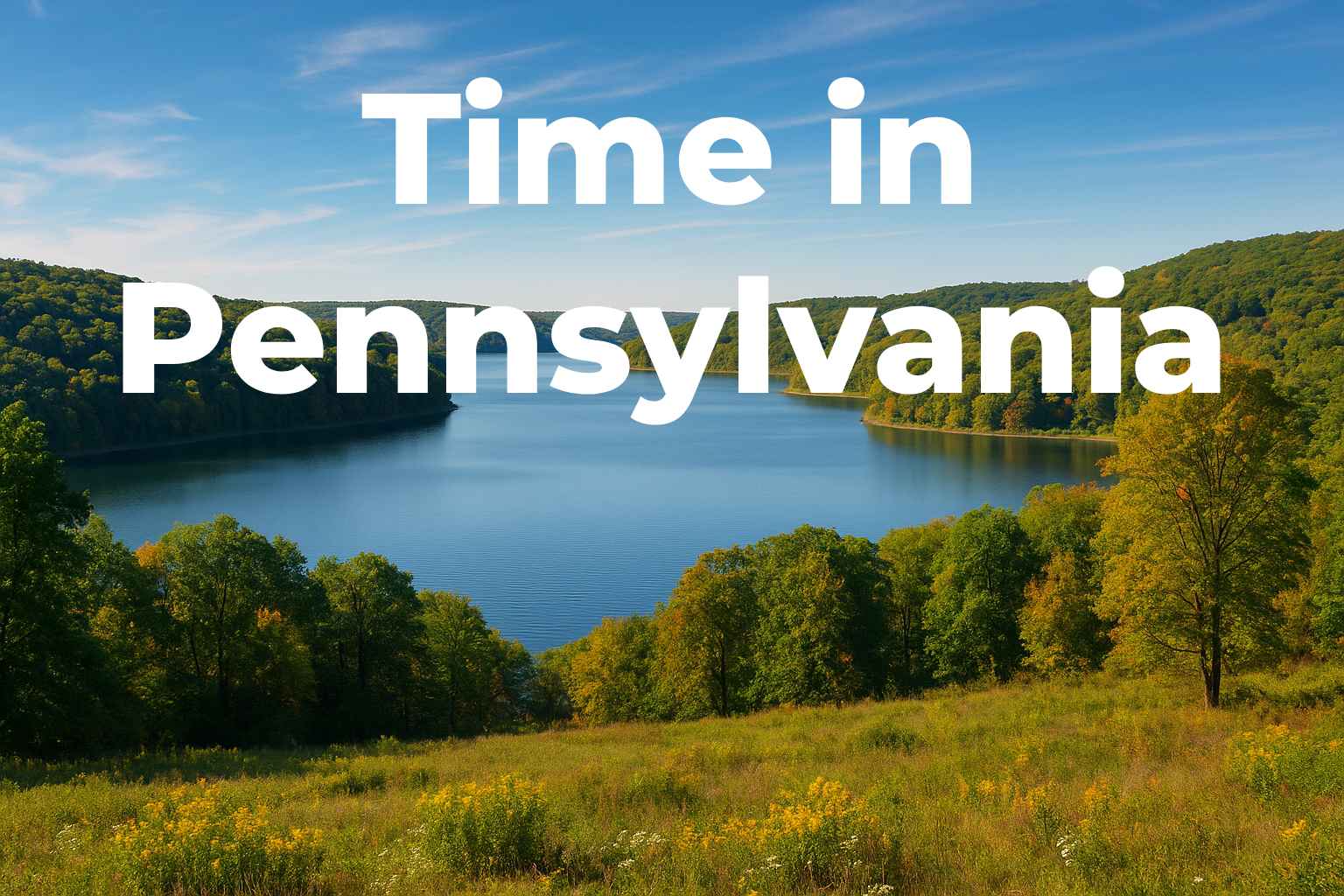
Pennsylvania uses Eastern Time, shifting between EST (UTC−5) in winter and EDT (UTC−4) in summer with Daylight Saving Time. Seasonal clock changes shape U.S. and global time differences for travel and communication.
Time in Pennsylvania
To check the local time in Pennsylvania, most references look to the state capital, Harrisburg. The entire state follows a single unified clock, ensuring consistent timekeeping in all counties and cities.
Pennsylvania’s Time Zone
The Eastern Time Zone (ET) is used by many states in the eastern U.S., along with parts of eastern Canada and the Caribbean. The region observes Daylight Saving Time (DST), creating two seasonal offsets:
Time Designation | Abbreviation | UTC Offset | Season |
|---|---|---|---|
Eastern Standard Time | EST | UTC−5 | Fall & Winter |
Eastern Daylight Time | EDT | UTC−4 | Spring & Summer |
EST (UTC−5): The baseline clock used in colder months, when sunsets occur earlier.
EDT (UTC−4): The summer-aligned clock, activated by moving time one hour forward to extend evening daylight.
Time Differences Across the U.S.
Relative to Pennsylvania:
Pennsylvania is 1 hour ahead of the Central Time Zone.
Pennsylvania is 2 hours ahead of the Mountain Time Zone.
Pennsylvania is 3 hours ahead of the Pacific Time Zone.
Pennsylvania is 6 hours ahead of Hawaii–Aleutian Time Zone, as Hawaii does not observe DST.
Pennsylvania’s time is identical statewide — there are no internal time zone splits.
Major Pennsylvania Cities and Time Usage
All major communities use the same seasonal schedule:
City | Winter (EST) | Summer (EDT) | Notes |
|---|---|---|---|
UTC−5 | UTC−4 | Eastern Time | |
Pittsburgh | UTC−5 | UTC−4 | Eastern Time |
Allentown | UTC−5 | UTC−4 | Eastern Time |
Erie | UTC−5 | UTC−4 | Eastern Time |
Scranton | UTC−5 | UTC−4 | Eastern Time |
Bethlehem | UTC−5 | UTC−4 | Eastern Time |
Lancaster | UTC−5 | UTC−4 | Eastern Time |
York | UTC−5 | UTC−4 | Eastern Time |
Reading | UTC−5 | UTC−4 | Eastern Time |
Wilkes-Barre | UTC−5 | UTC−4 | Eastern Time |
Comparing Pennsylvania Time to Global Regions
Because countries adjust clocks at different dates—or not at all—offsets vary by season:
Location | Time Gap During EST | Time Gap During EDT |
|---|---|---|
+5 hours | +4 hours | |
+10.5 hours | +9.5 hours | |
+14 hours | +13 hours | |
+6 hours | +5 hours | |
+2 hours | +1 hour (varies by Brazil DST) |
Example:
During EST: 9:00 AM in Pennsylvania → 2:00 PM in London.
During EDT: The same moment → 1:00 PM in London (one hour earlier relative to Pennsylvania).
Daylight Saving Time in Pennsylvania
Starts: Early Spring — clocks move 1 hour forward → EST to EDT.
Ends: Late Autumn — clocks move 1 hour back → EDT to EST.
DST impacts:
Flight and train planning
Cross-border communication
Remote work coordination
Live events and broadcasts
Geographic & Climate Context
Category | Details |
|---|---|
Location | Northeastern United States |
Borders | New York, New Jersey, Delaware, Maryland, West Virginia, Ohio |
Area | ~119,280 km² (~46,055 sq mi) |
Landscape Highlights | Appalachian Mountains, upland plateaus, forested valleys, river basins and great lakes shoreline |
Water Features | Lake Erie coast, major rivers & tributary networks |
Forest Coverage | One of the most heavily forested U.S. states, supporting a large outdoor recreation culture |
Geographic Overview of Pennsylvania
Capital: Harrisburg
Major Cities in Pennsylvania:
Philadelphia – The largest city, known for its historic roots and dense urban culture.
Pittsburgh – A major river-junction city shaped by bridges, engineering heritage, and highland scenery.
Allentown – A key eastern regional hub connected to surrounding manufacturing and logistics corridors.
Erie – The main city on the Lake Erie shoreline, influenced by lake-driven weather and port activity.
Reading – A long-established city set among upland ridges and forested surroundings.
Scranton – A northeastern mountain-valley city framed by steep hills and seasonal winters.
Bethlehem – Known for preserved industrial heritage and proximity to Appalachian foothills.
Lancaster – A notable south-central city tied to regional agriculture and historic communities.
Geographic Regions
Pennsylvania is traditionally divided into several major natural regions:
Lake Erie Coastal Plain – A narrow, cooler northern zone shaped by lake winds and shoreline terrain.
Appalachian Plateau – High elevation forests, ridges, and deep river valleys.
Ridge and Valley Region – Long mountain ridges, rural towns, and protected forest corridors.
Piedmont / Lowlands – More urban development, fertile soils, and rolling landscape.
Atlantic Slope – Eastern river systems that ultimately drain toward the Atlantic watershed.
Major Rivers & Tributary Systems
The state is known for large interconnected water networks including:
Susquehanna River Basin
Tributaries that feed major ecological corridors supporting forests, wetlands, bird migration routes, and freshwater wildlife habitats.
Highest and Lowest Points
Highest point: Near 979 m (3,213 ft) above sea level (Appalachian highlands region)
Lowest point: Sea level along eastern river drainage exit zones
Climate Influence
North: Cooler, lake-influenced seasons with snow-heavy winters
Central Highlands: Long winter periods, dense forests, strong seasonal contrasts
South & East: Warmer summers, humid springs, longer autumn foliage periods
The state uses one unified time zone, so daylight length and seasonal feel differ by latitude, not by clock standard.
Regional climate zones include:
Region | Climate Type | Characteristics |
|---|---|---|
North & Uplands | Humid Continental | Cold winters, warm summers, steady precipitation |
Central Valleys | Mixed Humid | Seasonal shifts, humid summers, snowy winters |
Lake Erie Region | Lake-effect Climate | Snow influence from the lake, cooler air mass patterns |
South | Transitional Humid | Milder winters than the north, hot and humid summers |
Key Industries in Pennsylvania
Manufacturing: industrial machinery, fabricated metals, chemicals, plastics, and advanced materials.
Agriculture: dairy, poultry, corn, mushrooms, apples, and food processing supply chains.
Energy: natural gas, clean energy development, power generation, and energy infrastructure.
Healthcare & Life Sciences: hospitals, medical services, pharmaceuticals research, biotechnology, and clinical innovation.
Information Technology: software development, cybersecurity, data infrastructure, and AI-driven solutions.
Financial Services: banking, insurance, investment operations, and back-office financial support.
Education: universities, research institutions, training, and academic services.
Logistics & Transportation: freight movement, rail transport, warehousing, port trade support, and distribution networks.
Real Estate & Construction: residential, commercial, industrial development and related services.
Tourism & Hospitality: historical sites, outdoor recreation, cultural tourism, and seasonal travel services.
Mining & Materials: coal, stone, sand, gravel, and mineral extraction.
Retail & E-commerce: consumer sales, online retail, and regional distribution hubs.
Food & Beverage: dairy products, snacks, beverages, and large-scale food production.
Automotive & Transportation Equipment: parts production and specialized vehicle systems.
Aerospace & Defense Supply: components, engineering support, and related manufacturing.
Professional Services: legal, consulting, engineering, architecture, and design services.
Summary
Pennsylvania uses the Eastern Time Zone, changing between EST (UTC−5) in winter and EDT (UTC−4) in summer due to DST. This seasonal clock governs U.S. offsets and global time comparisons. The state’s geography, climate variety, and major industries make time awareness essential for travelers, workers, and international communication.